

Case hardening is one of the most important drying defects in timber. It develops when the outer layers of wood dry and shrink faster than the centre, creating internal stresses that may not become apparent until the timber is sawn or machined. This page explains how case hardening develops, why it matters, and how it can be prevented or corrected.
Case hardening is an often misunderstood subject in the timber trade.
Case hardening in wood is defined as “a condition of stress and set in dry timber characterised by compressive stress in the outer layers and tensile stresses in the inner layers. An imbalance of stresses.”
Understanding case hardening starts with two important facts about how wood dries:-
(The following diagrams show the stresses developing in the cross-section of a piece of wood as the drying process proceeds. C indicates a region under compressive stress. T indicates a region under tensile stress).
During drying, the following sequence of events may occur:-
The surface regions dry to a moisture content below FSP before the inner regions: but the surface regions cannot shrink because they are restrained by the still swollen inner regions. SO THE SURFACE REGIONS GO INTO TENSION AND THE INNER REGIONS ARE PUT INTO COMPRESSION:-

Now if the drying conditions are not too severe this causes no problem, because these stresses are relieved once the inner regions start to dry and shrink.
But if drying is carried out too rapidly…
The surface layers may become permanently set while still in their stretched condition.
When the inner regions then begin to dry, they attempt to shrink, but they can’t - they are restrained by the (“too large”) outer regions. The timber is now case hardened, with compressive stresses at the surface and tensile stresses in the core:-
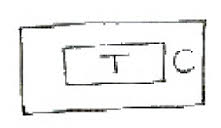
Case hardened timber will cup on re-sawing causing problems for the processor.
If noticed, case hardening can be rectified by steaming in the kiln: the humidity of the air in the kiln is greatly increased so that the surface regions gain moisture and swell. Now the stresses will disappear.
However, If steaming continues for too long, the surface layers absorb too much moisture and attempt to swell excessively. This produces another stress reversal producing the defect "reverse case hardening":-
To avoid these problems, kiln operators monitor the development of drying stresses and adjust drying conditions where necessary. The next page explains the methods used to detect case hardening and prevent it from developing.
If you're learning about drying defects, these guides explain how to recognise defects, prevent them, and optimise kiln drying.
How to Avoid Case Hardening, Collapse and Stains
Or return to the complete guide: